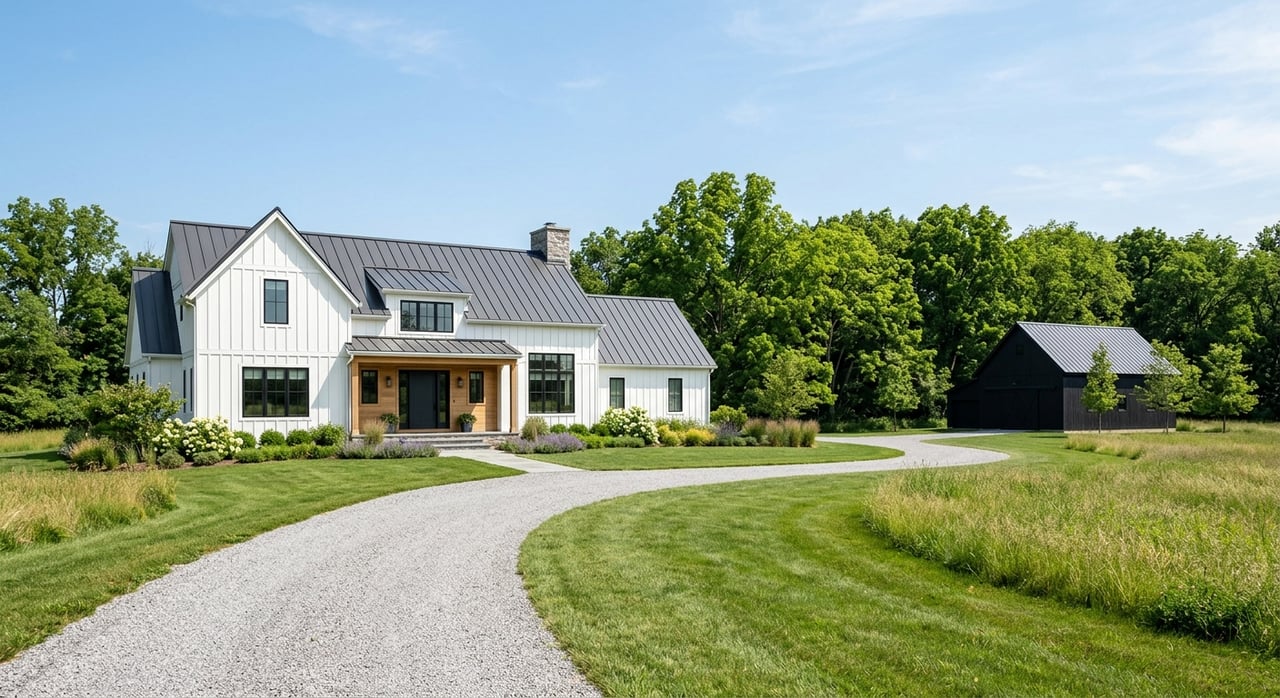
Selling Acreage Or A Mini-Farm Near Round Hill
April 23, 2026
April 23, 2026
If you are selling acreage or a mini-farm near Round Hill, you already know this is not a typical home sale. Buyers are not just comparing bedroom counts or kitchen finishes. They are looking at land use, access, wells, septic systems, fencing, outbuildings, and what the property can realistically support. The good news is that with the right preparation, you can make your property easier to understand, easier to trust, and more compelling to the right buyer. Let’s dive in.
Round Hill sits in western Loudoun County, within a rural landscape that the town and county describe as a working area of farms, vineyards, equine uses, and rural businesses with access to the larger Washington metro region. According to the Town of Round Hill planning context, that setting attracts buyers who often value privacy, land, and rural lifestyle features alongside commute access.
That matters when you sell. A buyer looking at a mini-farm or acreage near Round Hill may care less about price per square foot and more about practical questions like how much of the land is usable, whether animals have been kept there, what records are available, and whether the parcel has tax or land-use considerations.
The strongest sales strategy starts with understanding who is most likely to buy your property. In this part of Loudoun County, the buyer pool often includes equestrian users, hobby farmers, rural lifestyle buyers, and conservation-minded purchasers.
Loudoun County’s description of the rural economy includes crop and cattle production, the equine industry, specialty farms, vineyards, wineries, and rural support businesses. That is why buyers tend to think in terms of use case. They want to know how the property functions in real life, not just how large it is on paper.
For acreage and mini-farms, usable land often matters more than total acreage. Pasture, fenced ground, ride-out space, gardening areas, and detached structures may carry more weight than steep or heavily wooded land that is less practical for everyday rural use.
That does not mean every buyer wants a working farm. Some want a simple country property with privacy and flexibility. Either way, your marketing should help them quickly understand what the property offers and what it does not.
One of the smartest things you can do before listing is build a clean, buyer-friendly property file. Rural buyers often expect more documentation than they would for a standard suburban home.
At a minimum, it helps to gather:
Loudoun County notes that owners can search well and septic records, which can be a useful starting point if you need to rebuild your file before going to market.
Virginia does not automatically require a well inspection or water-quality test for a standard property transfer, and the Virginia Department of Health says it is not directly involved in real estate transactions. You can review that guidance in the state’s real estate transfer FAQ.
Still, buyers and lenders may ask for more information. In Loudoun County, well and septic permitting guidance shows how closely these systems connect to property improvements and future work, so having organized records can remove uncertainty early.
If your property has an alternative onsite sewage system, recordkeeping becomes even more important. Loudoun says those systems must be maintained and inspected by a licensed professional, with annual inspection deadlines for owners.
If your property is enrolled in a special tax program or district, buyers will want to understand that. Loudoun County’s Land Use Assessment Program allows deferred taxation for qualifying agricultural, horticultural, forestry, and open-space land, subject to program rules and documentation.
If the property is also part of an Agricultural and Forestal District, that status may affect both tax treatment and buyer expectations. It can be a value point for some buyers, but only if it is explained clearly and accurately.
One of the biggest issues rural sellers should understand is rollback tax exposure. This does not apply in every case, but it can become important if land use changes, the parcel is subdivided, or the property shifts out of a qualifying classification.
Loudoun County states that rollback taxes may apply based on the difference between use value and fair market value for the current year and the previous five years, with interest. If you are considering any changes before listing, or if you plan to market the property in a way that emphasizes future use, it is wise to confirm how that could affect the tax picture.
Acreage near Round Hill is rarely priced well by using square footage alone. Land value is often shaped by a combination of legal use, usability, access, soils, water, improvements, and overall flexibility.
That is why two properties with similar acreage can perform very differently in the market. A parcel with functional pasture, fencing, outbuildings, and solid documentation may attract stronger buyer interest than a larger tract with limited practical use or unclear records.
When buyers look at mini-farms and farmettes, they often ask questions such as:
For soil-related due diligence, the USDA NRCS provides the Web Soil Survey, which is the official source for soil survey information. Buyers interested in gardening, livestock, or other land-based uses may look at drainage, restrictive layers, and suitability when comparing properties.
This point causes confusion for many sellers. Loudoun notes that land-use assessments are generally lower than fair market value, which means a favorable tax treatment does not automatically tell you what the property should list for.
Market value depends on what an end user is willing to pay for the property’s location, condition, usability, and legal framework. For acreage and mini-farms, that usually requires a more tailored pricing strategy than a standard neighborhood resale.
The best marketing for acreage near Round Hill usually centers on how the property can be used. Instead of stopping at acreage count, strong presentation explains the practical features that matter to rural buyers.
That may include horse use, small-scale livestock potential, garden areas, hay or pasture ground, detached structures, water access, or room for future rural improvements if allowed. The county’s ongoing rural uses and standards review shows how important land use, agricultural processing, conservation, and related rural activities remain in western Loudoun.
When a serious buyer reviews your property, they should be able to understand the basics quickly. A strong listing package may highlight:
This kind of preparation builds confidence. It also helps reduce the risk of your property being overlooked by buyers who simply cannot tell, from an incomplete listing, whether it fits their goals.
Clear marketing is not just about highlighting features. It is also about setting accurate expectations.
If there is no ability to subdivide, say so. If there is no current agricultural income, make that clear. If local rules or property conditions limit certain uses, it is better to address that upfront than to let buyers make assumptions.
That kind of transparency can save you time and help attract better-qualified interest. It also supports smoother negotiations because the buyer is making decisions based on a clearer picture from the start.
A mini-farm or acreage property often needs more than standard listing photos and a short description. Buyers may need a fuller story that explains the land, the improvements, and the paperwork behind them.
That is where thoughtful marketing can make a real difference. A polished presentation, paired with clear documentation and a pricing strategy grounded in how rural buyers think, can help your property stand out in a niche segment of the Loudoun market.
If you are preparing to sell acreage or a mini-farm near Round Hill, working with a team that understands both rural property details and high-quality listing presentation can help you attract the right audience. When you are ready for a tailored strategy, connect with 15 West Homes.
October 22, 2026
October 15, 2026
October 8, 2026
October 1, 2026
September 24, 2026

September 17, 2026
September 10, 2026
September 3, 2026
August 27, 2026
Explore our site for the latest real estate news, market trends, community updates, and exclusive listings. Whether you're buying or selling, our expert team is here to guide you every step of the way. Join our community and make your real estate journey a success.