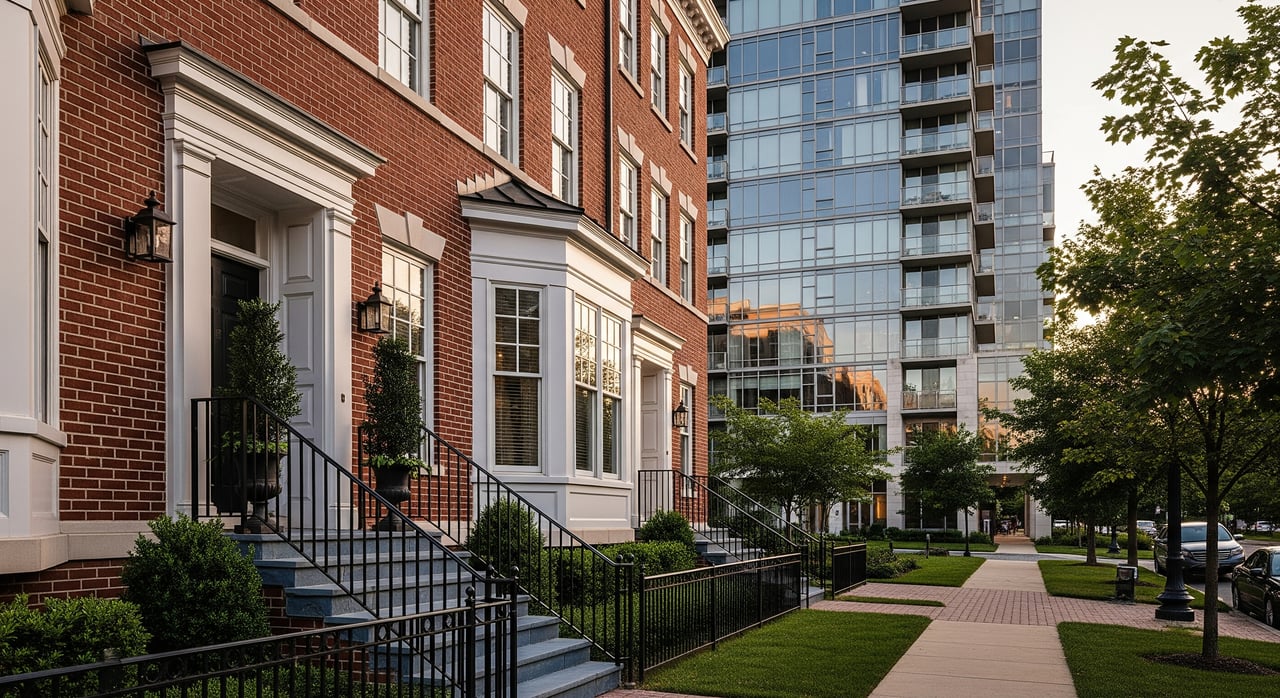
Reston Condo vs Townhome: Comparing Fees, Rules & Resale
January 1, 2026
January 1, 2026
Thinking about a condo or a townhome in Reston but not sure which fits you better? Between monthly fees, community rules, and resale considerations, the details can be confusing. You want a home that matches your lifestyle and budget without surprises. In this guide, you’ll learn how condos and townhomes differ in Reston on fees, rules, maintenance, and resale, plus what to check before you buy. Let’s dive in.
A condominium means you own the interior of your unit and share ownership of common elements like hallways, roofs, and grounds. A condominium association manages the building, amenities, and a master insurance policy. A townhome generally means you own the structure and the land under it. An HOA may still manage shared areas and set covenants.
In Reston, many properties are also part of Reston Association. That adds a community-wide layer of amenities and covenants that sit alongside your condo association or HOA. Proximity to the Silver Line Metro and Reston Town Center also shapes demand, with many condo buyers valuing walkability and transit access, and many townhome buyers prioritizing space and a small outdoor area.
Condo and townhome fees vary by community, age of the property, and amenities. It helps to understand what your dues actually cover and whether you will also pay a Reston Association assessment.
Condo fees are often higher because the association typically maintains the exterior, roof, elevators, common mechanicals, and shared utilities. Buildings with amenities like pools, gyms, concierge service, or on-site staff usually have higher dues. The master insurance policy and contributions to reserves for big projects are also built into the fee.
Townhome HOA fees are often lower when owners handle exterior maintenance such as roofs and siding. Some townhome communities include exterior maintenance in the HOA, which raises the fee. Many HOAs cover landscaping for common areas, snow removal, trash, and roads, and may fund reserves for paving and other capital work.
Many Reston homes carry a separate Reston Association assessment for community-wide amenities and covenant enforcement. If you buy in a condo building that is also in Reston Association, you may pay both the condo fee and the RA assessment. Always add both when estimating your monthly housing cost.
Every condo or townhome community runs on governing documents and rules that shape daily living and resale. In Virginia, these communities operate under the Virginia Condominium Act or the Virginia Property Owners’ Association Act.
Common rule areas include architectural changes, exterior paint or additions, satellite dishes, parking and guest parking, pet policies, leasing caps, and short-term rental rules. Townhomes may feel more flexible, but many Reston HOAs still require approvals for exterior changes. For condos, building-level rules like elevator use, package handling, smoking bans, and move-in procedures can impact your experience.
Boards and community managers handle violations and fines based on the governing documents. Review recent minutes to understand enforcement patterns and any ongoing issues. State statutes outline owner rights and association procedures, while resale packets disclose key information buyers and lenders need.
Maintenance responsibilities and the strength of the reserve fund directly affect your budget and the chance of special assessments.
A healthy reserve fund helps pay for large projects like roofs, elevators, paving, and facade repairs. If reserves fall short, associations may levy special assessments. Review the most recent reserve study, planned projects, and assessment history to spot risk.
Condo buildings carry a master policy for common areas and often portions of the building structure. You typically carry an HO-6 policy for your interior and personal property. Townhome owners usually carry an HO-3 or HO-5 policy that covers interior and often exterior items, depending on the CC&Rs. Check the master policy deductible and coverage details in the resale packet so you are not surprised by out-of-pocket costs after a claim.
Resale strength depends on buyer demand, financing options, building health, and association rules.
Condos in walkable or transit-accessible areas of Reston often appeal to first-time buyers, downsizers, and commuters. Townhomes tend to attract buyers who want more space, private entries, and a bit of outdoor area. Owner-occupancy rates, pet policies, and leasing rules can broaden or narrow your buyer pool.
Condo financing can be more complex. FHA and VA loans require project approval or that the condo meets program criteria. Fannie Mae and Freddie Mac also set standards on budgets, reserves, owner-occupancy, litigation, and more. If a project is not eligible, your buyer pool may shrink. Townhomes usually follow standard single-family underwriting and face fewer project-level hurdles.
Look at days on market, sale-to-list price ratios, and inventory for similar Reston condos or townhomes. Read building minutes for signs of litigation, high delinquency, repeated special assessments, or major upcoming projects. Strong reserves, transparent governance, and reasonable rules are positive signals.
Use this list before you write an offer or during your review period:
Choose a condo if you want a lower-maintenance lifestyle and are comfortable with higher dues that include building services and amenities. Pick a townhome if you want more space and control of exterior items, understanding you may take on more maintenance. In Reston, always factor in the Reston Association assessment along with your condo or HOA dues to get a true monthly cost. Review the documents, ask targeted questions, and look closely at reserves and rules before you decide.
If you want a local guide to compare specific Reston buildings and neighborhoods, reach out to the team at 15 West Homes. We can help you weigh fees, rules, and resale so you can move forward with confidence.
October 22, 2026
October 15, 2026
October 8, 2026
October 1, 2026
September 24, 2026

September 17, 2026
September 10, 2026
September 3, 2026
August 27, 2026
Explore our site for the latest real estate news, market trends, community updates, and exclusive listings. Whether you're buying or selling, our expert team is here to guide you every step of the way. Join our community and make your real estate journey a success.