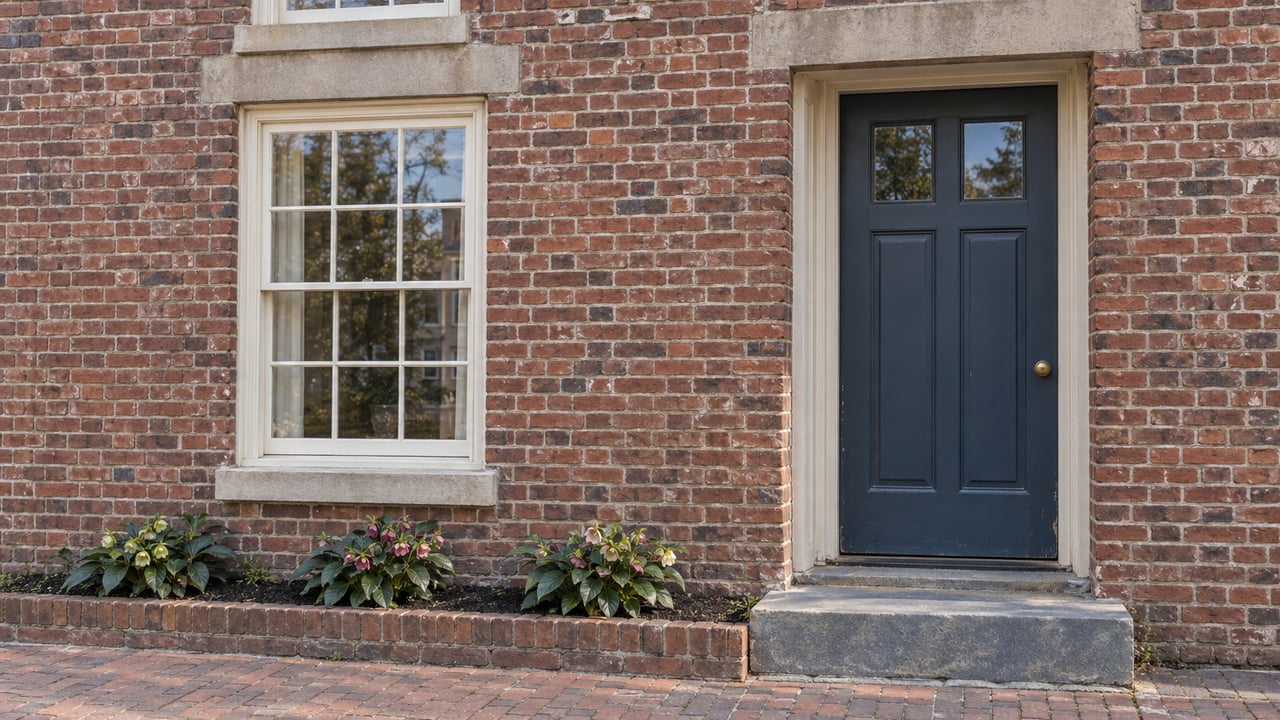
Leesburg Historic District Sellers: Understanding the Town Approval Process
October 1, 2026
October 1, 2026
As reported by CitizenPortal, a homeowner described white vinyl replacement windows as "permitted under carriageway's guidelines." The homeowner stood in front of Leesburg's Board of Architectural Review this past August. The homeowners association had signed off. The windows were in, installed back in July 2025. The only signature still missing belonged to the Town of Leesburg, and the board didn't grant it until more than a year after installation, and only with a note attached that the approval shouldn't be read as a green light for anyone else on the block.
That gap, between what a homeowners association will approve and what the Town of Leesburg's H-1 Old and Historic District overlay will actually permit, is the detail most pre-listing checklists skip. If you own, or are about to buy, a home inside Leesburg's historic core, the HOA's yes is not the last yes you need.
The H-1 overlay does not care whether your street looks like a postcard or a modern townhome row. It applies to every property inside the mapped Old and Historic District boundary, and it requires a Certificate of Appropriateness for every exterior alteration, including straightforward in-kind replacement of existing material. That last part surprises people. Swapping a rotted board for an identical one still requires a COA on paper, even though staff can often clear routine like-for-like repairs administratively.
The Maximilian Court case is the clearest illustration of why this matters at resale. That property is a townhouse the board itself described as a noncontributing structure, meaning it doesn't carry the same architectural weight as a 19th-century brick rowhouse on King Street. It still needed Town approval for its windows. The homeowners association's rules and the Town's design guidelines are two separate documents administered by two separate bodies, and satisfying one tells you nothing about whether you've satisfied the other. A seller who treats HOA paperwork as the finish line can end up disclosing, or worse, discovering during a buyer's due diligence, that an exterior change was never formally cleared by the Town.
Even within Town review, the outcome isn't a simple checklist. Two cases decided close together in 2025 show how much depends on the specific elevation and the specific history of the opening being changed.
At 209 South Street Southeast, the board approved three new double-hung wood windows on the second-story front elevation after preservation staff concluded the windows already in place weren't original to those openings and were too deteriorated to repair. The board went further and found that the mismatched windows on the first floor were themselves a later, non-historic alteration rather than fabric worth preserving. The vote passed 7 to 0 in a single hearing.
Another set of homeowners ran into a harder case. According to CitizenPortal, they told the board they "really are investing in the house." Their application covered a porch enclosure, door infill, and window replacements, but the board balked at a proposed three-window grouping on the primary, street-facing elevation while signaling more openness to a similar change on the rear elevation, which had already been altered over the years and was treated less strictly under the guidelines. The application was deferred and sent back for revisions, then returned the following month.
Same overlay, same year, two different results. The difference wasn't the age of the house. It was which elevation faced the street and how much of the original fabric staff believed was still there to protect.
| Address | What Was Requested | HOA Status | Town BAR Outcome | Time to Resolution |
|---|---|---|---|---|
| 115 Maximilian Court SW | Vinyl window replacement on a noncontributing townhouse | HOA guidelines allowed it | Approved, explicitly case-by-case with no precedent set | Windows installed July 2025; Town approval didn't come until August 3, 2026 |
| 209 South Street SE | Three second-story wood windows, front elevation | Not HOA-governed | Approved 7-0 after staff found existing windows non-historic | Single hearing, March 19, 2025 |
| 201 South Street SE | Porch infill, door infill, three-window grouping on primary elevation | Not HOA-governed | Deferred over primary-elevation dispute, revised and resubmitted | Filed for a February 19, 2025 hearing, returned on March 19, 2025 |
The spread in that last column, from a same-day approval to a process that stretched past a year, is the real lesson. You cannot predict which end of that range your project will land on just by knowing your project is "just windows."
Part of why timelines swing so widely is procedural. Leesburg's Board of Architectural Review holds regular business meetings on the third Wednesday of each month, with work sessions on the first Monday as needed. Smaller items such as fences, paint colors, driveway paving, and landscape lighting can be approved administratively by preservation staff without a public hearing. Larger changes such as window replacement or new construction cannot. They go to the full board, and a board hearing requires public notice: yellow placards posted on the property and letters mailed to adjacent owners, giving neighbors a formal chance to weigh in before a vote.
If your case gets deferred, as happened at 201 South Street Southeast, you're not just waiting for a revision. You're waiting for the next scheduled meeting slot, which by the calendar above can add three to four weeks before you're back in front of the board at all. A seller working toward a spring listing who discovers in February that an exterior repair needs a COA is not looking at a quick fix. They're looking at a process that, in a straightforward case, might clear in one hearing, and in a contested one, might not clear before the original listing date arrives.
None of this is a reason to avoid buying or selling in Leesburg's historic core. It's a reason to plan the calendar honestly, because the market is telling you the character is worth paying for. In May 2026, tracked list prices inside Leesburg's Old and Historic District sat at a median of $894,698, up 1.4 percent year over year. That runs well above the town's broader median home value, which sat closer to $756,000 in early 2026 based on Zillow's index. Buyers are paying a real premium for brick sidewalks, century-old architecture, and a Board of Architectural Review that keeps the neighbor next door from building something that clashes with it.
That premium is the argument for doing the compliance work properly rather than skipping it to save a few weeks. A COA on file, even for something as small as a window, is part of what a buyer's attorney or lender is checking for when a historic property goes under contract. An undocumented change discovered late in a transaction is a far more expensive delay than a extra month on the BAR calendar would have been.
Does my homeowners association's approval cover me with the Town? No. The Maximilian Court case shows the Town treats its own review as independent of whatever an HOA has already approved, even when the HOA's own guidelines permitted the change.
Is in-kind replacement automatically approved? Not automatically, though it moves faster. A Certificate of Appropriateness is still required for in-kind replacement of material inside the Old and Historic District, and staff can clear some smaller in-kind repairs administratively. Larger in-kind work, like window replacement, still goes to the full board.
How far ahead of listing should I apply? Build in at least one full meeting cycle, and plan for two if your project touches a primary street-facing elevation. The board meets monthly, and a deferred application returns at the next scheduled session, not sooner.
Does the rule apply to every house in the district, or just the grand ones? Every property inside the mapped H-1 boundary, including townhouses the board itself classifies as noncontributing to the historic character. Maximilian Court is the proof.
If you're weighing a sale inside Leesburg's Old and Historic District, or you're eyeing a purchase there and want to know what a renovation timeline actually looks like before you write an offer, 15 West Homes can walk the specifics of your address against the Town's guidelines before you commit to a listing date. Request your free home valuation and we'll build the calendar with you, not around you.
This article is general information, not legal, tax or financial advice. Consult a qualified professional about your situation.
October 22, 2026
October 15, 2026
October 8, 2026
October 1, 2026
September 24, 2026

September 17, 2026
September 10, 2026
September 3, 2026
August 27, 2026
Explore our site for the latest real estate news, market trends, community updates, and exclusive listings. Whether you're buying or selling, our expert team is here to guide you every step of the way. Join our community and make your real estate journey a success.